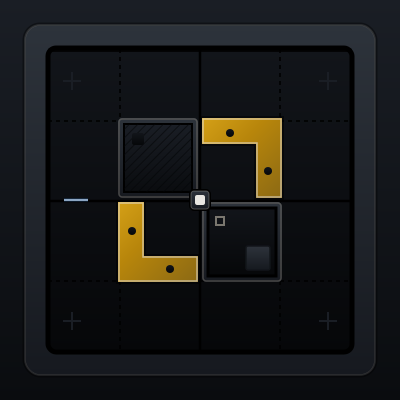
Proximity
Things placed close together read as related; distance signals a boundary.
Also heard as: grouping, visual grouping
Definition
Proximity is the spacing relationship that tells people which items belong together and which ones are separate.
Why it matters
Good grouping lowers cognitive load because users can chunk content instead of parsing every row, label, and action one by one.
Visual comparator
Prompt language
- Tighten the label and helper text into one group, then add more space before the next field block.
- Separate destructive actions from the safe settings group so the relationship is unambiguous.
Anti-patterns
- Using the same gap between unrelated sections and tightly related controls.
- Letting a label drift farther from its field than from the next section heading.
When to research more
Research more when forms, settings pages, or data-heavy tables require several nested levels of grouping or progressive disclosure.
Related components
Stack
Arrange elements in one direction with consistent spacing rhythm.
Card
Group related information into a bounded, scannable surface.
Text Input
Capture short-form text with clear labels and validation feedback.