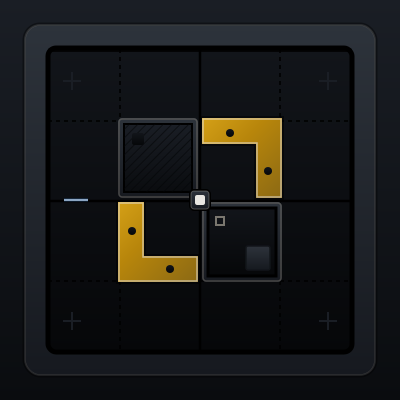
Whitespace
Whitespace is not wasted room; it is the space that lets content breathe and separate.
Also heard as: negative space, breathing room
Definition
Whitespace is the intentional empty space around and between elements that gives structure, pacing, and focus to the layout.
Why it matters
Good whitespace makes dense information usable. Bad whitespace either starves the layout or leaves important groups floating without support.
Visual comparator
Prompt language
- Open up the hero and card gutters so the important blocks can breathe without centering everything into a tiny column.
- Increase section spacing more than internal card spacing so the page reads in clear chunks.
Anti-patterns
- Compressing everything until labels, actions, and support text blur together.
- Creating huge empty gutters while keeping the content itself cramped and under-scaled.
When to research more
Research more when long-form reading, dense data views, or responsive breakpoints make spacing tradeoffs materially different across devices.